

Year 10 Core Subjects
In Year 10 students must undertake Religious Education (Semester 1 & 2), English (Semester 1 & 2), Health and Physical Education (Semester 1 & 2), Mathematics (Semester 1 & 2), Core Science (1 Unit) and History (1 Unit).

Students choose either VCE Religion & Society Unit 1 or VCE Text & Traditions Unit 1 for both semesters. Students on an academically adjusted program can undertake Religion & Society or Text & Traditions as a Year 10 enrolment, not as a VCE enrolment. This will enable learning adjustments to continue. This can be discussed at students’ next PSG meeting.
VCE Religion & Society
Unit 1
Overview
In this unit students explore the origins of religions and the role of religions in the development of society, identifying the nature and purpose of religion over time for the individual who is searching for meaning, and for society which is shaped by religious structures, beliefs and ethics. They investigate the contribution of religion generally to the development of human society.
Students examine how religions are shaped by 9 Aspects and how individuals, groups and new ideas have affected and continue to affect religious traditions.
The unit provides an opportunity for students to understand the relationships that exist between individuals, groups, new ideas and religious traditions in the Australian society in which they live. They will participate in an excursion that visits a range of other faith traditions.
Unit Prerequisites
The study of Religious Education is compulsory for each year of study at Avila College. In Year 10, students must study a Religious Education unit for the whole year. Year 10 students may choose either Religion and Society Unit 1 or Texts and Traditions Unit 1 or Youth Ministry 1.
Areas of Study
There are three areas of study:
- The nature and purpose of religion
- Religion through the ages
- Religion in Australia
Assessment
A variety of assessment is used in this unit:
- Research
- Essay
- Visual &/or Oral Presentation
- Media Analysis
- Examination
VCE Text & Traditions
Unit 1
Overview
In this unit students examine the place of texts and their literary forms within a religious tradition. Story-telling is one of the major literary forms in religious traditions; other forms include law, prophecy, sacred songs, reflection and instruction. Students explore the importance of texts at the source of a tradition and how their meaning for the earlier and continuing tradition might be found and described. The process of searching for and giving expression to the meaning of text is called exegesis. This unit introduces students to basic methods of exegesis using texts from the Bible to bring about a deeper awareness of how texts came about, and the meaning of texts to the religious tradition. This unit also explores how texts have been used by people both within and beyond the religious tradition to bring meaning to issues or ideas in a new cultural setting. This unit requires the study of texts in a variety of literary forms.
Unit Prerequisites
The study of Religious Education is compulsory for each year of study at Avila College. In Year 10, students must study a Religious Education unit for the whole year. Year 10 students may choose either Religion and Society Unit 1 or Texts and Traditions Unit 1 or Youth Ministry 1.
Areas of Study
There are three areas of study:
- The importance of sacred texts to the tradition
- The exegesis of text
- Sacred texts and later traditions
Assessment
A variety of assessment is used in this unit:
- Open Book Test
- Research
- Exegesis
- Presentation
- Examination
 Overview
All students study English as a core subject. The English curriculum is built around three interrelated strands of: Language, Literature and Literacy.
Together the strands focus on developing students’ knowledge, understanding and skills in listening, reading, viewing, speaking, writing and creating.
Assessment
Assessment consists of text responses, oral presentations, creative writing, language analyses and end of semester exams.
Students choose either Mainstream Mathematics or Mathematics A or Foundation Mathematics for both semesters. Discuss your choice with your Year 9 Mathematics teacher.
Year 10 Mainstream Mathematics

This course is strongly recommended for all students who have completed Year 9 Mainstream Mathematics in Semesters 1 and 2. It is preparation for Units 1 & 2 General Mathematics only.
Overview
The Year 10 Mainstream Mathematics course is a standard Mathematics course, which is designed for students to cover all content areas. A focus of this course is to build students’ understanding of skills and concepts through a variety of techniques, such as solving problems both with and without the CAS calculator and undertaking investigations that include both routine and non-routine questions. Students develop their ability to solve problems independently and are guided in obtaining knowledge from a variety of sources.
The content covers the following 6 strands:
- Number
- Algebra
- Measurement
- Geometry
- Statistics
- Probability
Students engage in activities which develop:
- knowledge of facts and technical skills
- depth of conceptual understanding
- ability to communicate using clear and precise mathematical language
- ability to tackle non-routine problems in an organised and systematic way
- ability to apply what has been learned to solve real life problems
- ability to conduct investigations using mathematics
- logical reasoning and understanding of proofs at the appropriate level of sophistication
- practical ability in measuring, estimating and making sensible use of CAS calculators
Pathways
Students who successfully complete Year 10 Mainstream Mathematics may enrol in Units 1 & 2 General Mathematics in Year 11. Year 10 Mainstream Mathematics is not an adequate preparation for any student intending to complete Units 1 & 2 Mathematical Methods in Year 11.
Mathematics is an asset in all areas of life and is required in a range of careers including commerce, health industries, finance, retail and engineering. Students are advised to consult widely with careers teachers and University/TAFEs to find out what level of mathematics is required to access tertiary courses in a student’s area of interest.
Year 10 Mathematics A
Students who have studied Extension Mathematics in Year 9 may continue with the Year 10 Mathematics A course from the beginning of the year. It is preparation for either Units 1 & 2 Mathematical Methods or Units 1 & 2 General Mathematics. This course is the usual pathway for Units 1 & 2 Mathematical Methods and/or Units 1 & 2 Specialist Mathematics.
Overview
The Year 10 Mathematics A course is designed for students requiring more challenging work, with a greater emphasis on applying skills in complex problems. To cover the content of this course students need to work at a faster pace, have strong number skills and become more independent and proactive about obtaining knowledge from a variety of sources. Students cover all the content of the Year 10 Mathematics course but concepts are explored in more depth and a greater emphasis is placed on analytical skills. There are also a number of topics that only the Mathematics A students will explore. It is recommended that students who study Mathematics A participate in the Australian Maths Competition.
The content covers the following 6 strands:
- Number
- Algebra
- Measurement
- Geometry
- Statistics
- Probability
Students are required to learn, practise and apply mathematical algorithms, routines and techniques. The use of technology (CAS calculator and laptop) is incorporated into the course. This allows the students to grasp a better understanding of skills and solve more complex questions.
Assessment
Assessment is based on facts, skills, tests, problem solving and application tasks.
There is continual assessment throughout the year with reports issued at mid year and at the end of year. Two examinations, (technology enabled and technology-free) are held at the end of each semester.
Pathways
Students who successfully complete Year 10A Mathematics have the choice to enrol in any of the following combinations of Mathematical studies in Year 11:
- Units 1 & 2 Mathematical Methods.
- Units 1 & 2 Mathematical Methods concurrently with Units 1 & 2 Specialist Mathematics
- Units 1 & 2 Mathematical Methods concurrently with Units 1 & 2 General Mathematics
- Units 1 & 2 General Mathematics
Mathematics is an asset in all areas of life and is required in a range of careers including commerce, health industries, finance, retail and engineering. Students are advised to consult widely with careers teachers and University/TAFEs to find out what level of mathematics is required to access tertiary courses in a student’s area of interest.
Foundation Mathematics Unit 1 and 2

Overview
In consultation with your Maths teacher, students undertaking an adjusted Maths program in Year 9 are able to select Foundation Maths. Please note, this implies Maths will not be studied at the VCE level. If the student selects the VCE Vocational Major or Victorian Pathways Certificate course in Year 11-12, Numeracy will be studied.
Please note. This course by itself is not an adequate preparation for any further studies of VCE Mathematics. A student enrolled in Foundation Maths Unit 1 & 2 will not be able to enrol in Units 1 & 2 General Mathematics or Units 1 & 2 Mathematical Methods in Year 11.
The areas of study for Foundation Mathematics Units 1 and 2 are:
- Algebra, number and structure
- Data analysis, probability and statistics
- Discrete mathematics
- Space and measurement
Foundation Mathematics Units 1 & 2 is recommended for Year 10 students who are intending to enrol in VM (Vocational Major) or VPC (Victorian Pathway Certificate) in Year 11.
Assessment
Assessment tasks will be drawn from:
- portfolio
- assignments
- tests (with and without technology)
- solutions to sets of worked questions
- summary or review notes
- modelling tasks
- problem solving tasks
- mathematical investigations
Overview
The Year 10 Health and Physical Education curriculum engages students in critical inquiry processes that assist students to research, analyse, apply and appraise knowledge in health and movement fields. In doing so, students will critically analyse and critically evaluate contextual factors that influence decision making, behaviours and actions, and explore inclusiveness, diversity and social justice.
The knowledge, understanding, skills and dispositions students develop through movement in Health and Physical Education encourage ongoing participation across their lifespan and in turn lead to positive health outcomes. Movement competence and confidence is seen as an important personal and community asset to be developed, refined and valued.
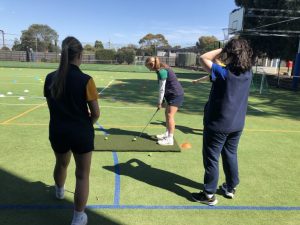
Students undertake units of work ranging from nutrition, health benefits of physical activity, mental health and wellbeing and community health to themed based physical activities such as invasion games, striking & fielding games, net & wall games, fitness and dance.
Assessment
Avila Health and Physical Education students will approach learning by utilising their critical thinking, creativity, communication and collaboration skills. In doing so, they will develop the key character qualities of curiosity, initiative, persistence, adaptability, leadership and social awareness. Students will undertake a variety of common assessment tasks which include:
- Collaborative tasks
- Reflective journals
- Self and peer assessments
- Theoretical tests
- Skills assessments
Pathways
- VCE Health and Human Development
- VCE Physical Education
Students choose can choose one of the three History subjects listed below. Please note History Learning Enhancement is an alternative to mainstream History and enrolment is by invitation only. It is likely to be a continuation of participation Year 9 Learning Enhancement.
History | The Modern World

Overview
In this course of study, students explore the history of the modern world and Australia from 1918 to the present, with an emphasis on Australia in its global context.
The twentieth century became a critical period in Australia’s social, cultural, economic and political development. The transformation of the modern world during a time of political turmoil, global conflict and international co-operation provides a necessary context for understanding Australia’s development, its place within the Asia-Pacific region, and its global standing.
Assessment
- Essay
- Document Analysis
- Research Task
- Examination
VCE | History subjects available at Year 10
Overview
Students can apply to accelerate in History according to acceleration requirements.
History | Learning Enhancement
Overview
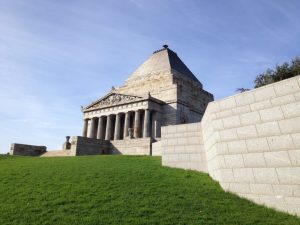
This unit is a continuation of Learning Enhancement from Years 8 and 9, and replaces mainstream History. Students on an academically adjusted Year 10 program and students with additional learning needs are invited via their Program Support Group meeting to undertake this semester unit. Developing knowledge of Australia’s participation in the Second World War is a focus. Skills include note taking, reading comprehension and an examination of visual and audio visual sources. Tasks are academically adjusted, designed to be practical and students visit the Shrine of Remembrance. Developing communication skills both orally and in writing is a focus.
Assessment
Assessments may include:
- Timeline task
- Film analysis and summary
- Document Analysis
- Reading Comprehension tests
- Oral quiz
- Note: There is no examination for this subject
Year 10 | Sciences
Students are required to study a full year of Science at the Year 10 level. Students anticipating a career in the Sciences may take an additional Science unit as an elective if desired.
In Semester One all students will do Core Science consisting of units in Chemistry, Biology and Physics. In Semester Two all students will choose a Science Elective subject which will explore the chosen topics at greater depth.
Year 10 Science subjects offered are as follow;
- Year 10 Core Science (semester 1)
- Year 10 Agriculture and Horticulture Elective (semester 2)
- Year 10 Chemistry and Biology Elective (semester 2)
- Year 10 Chemistry and Physics Elective (semester 2)
- Year 10 Biology and Psychology Elective (semester 2)
Accelerated Studies
At Year 10 Students may undertake one of the VCE Science subjects (VCE Agriculture and Horticulture Unit 1 and/or 2, VCE Biology Units 1 and/or 2, VCE Physics Unit 1 and/or 2) as part of their required allotment. Note that students wishing to undertake accelerated Physics should have both a keen interest in experimenting as well as strong mathematical skills. VCE Psychology Unit 1 and/or Unit 2 can also be taken as accelerated studies in Year 10 but they must be counted as elective units and chosen in addition to another two Science units as they do not cover Victorian Curriculum content.

Overview
Year 10 Core Science gives background in three Sciences Biology, Chemistry and Physics. In the Biology unit students investigate genetic inheritance. In the Chemistry unit, different types of reactions are investigated followed by a study of factors affecting rates of chemical reactions. For the Physics unit, students learn about Newton’s Laws of Motion including speed and acceleration.
Assessment
Assessment tasks are drawn from tasks such as topic tests, practical reports, visual representations and research tasks. There will be an exam at the end of semester 1 based on the content from all three units.
Pathways
Year 10 Core Science in Semester One provides the basis of all VCE Science subjects. Students are eligible to choose any of the Science subjects in VCE. These are Agriculture and Horticulture, Biology, Chemistry, Physics and Psychology. Students are also required to choose a second Science Elective subject in Semester Two which will further prepare them for studies in VCE Sciences.

Overview
In this unit, you will gain insight into the significance of Australia’s food and fibre industries. You will learn about both plant and animal structure and function, and consider how growth and development can be impacted by environmental elements such as climate, water availability and soil composition.
You will examine the principles of animal welfare and occupational health and safety, investigating best practices in these areas. As an integral part of the course, you will apply the theoretical concepts learned in class through hands-on practical activities. These activities will provide you with the opportunity to explore a range of plant propagation and soil testing techniques, and refine your animal husbandry skills while caring for the animals at the AgHort Centre.
Assessment
Assessment tasks are drawn from tasks such as topic tests, practical reports, visual representations and research tasks.
Pathways
Year 10 AgHort is a direct pathway for VCE Agricultural and Horticultural Studies. The Year 10 AgHort elective is not advised as a pathway for VCE Biology, Chemistry, Physics or Psychology.
View AgHort Careers Bullseye

Chemistry
This unit is recommended if you are thinking of studying VCE Chemistry. Essential background theory is investigated in two main contexts: Analysis of Unknown Compounds and Organic Chemistry. You will extend your use of chemical formulae and the Periodic Table to describe ionic compounds and balance chemical equations. You will apply your chemical knowledge and practical skills to analyse unknown substances and, during the process, investigate a range of reaction types. The factors which influence the rate of chemical reactions are accurately explored using data-logging equipment and a variety of practical techniques.
Biology
The way you look is part of your genetic make-up. Genetics is the branch of Biology concerned with heredity and the study of laws governing similarities and differences between parents and offspring. This unit considers DNA and RNA, their structure and role in the genetic code and making proteins. This unit also looks at Darwin’s theory of evolution and how we explain biodiversity. Natural selection, variations in populations and the use of fossil evidence is explored.
Assessment
Assessment tasks are drawn from tasks such as topic tests, practical reports, visual representations, research tasks and an experimental investigation.
Pathways
Year 10 Chemistry and Biology provides a Pathway for VCE Chemistry and Biology but can also be followed by VCE Unit 1 & 2 AgHort, Physics or Psychology.

Physics
This unit is recommended if you are thinking of studying VCE Physics. In this unit, you will carry out guided experimental investigations relating to such things as forces involved in driving cars, and avoiding or surviving collisions. You will learn how to design experiments to test your predictions and how to apply mathematical models to account for your experimental data. You will study Newton’s Laws of motion and investigate the forces that produce movement.
Chemistry
This unit is recommended if you are thinking of studying VCE Chemistry. Essential background theory is investigated in two main contexts: Analysis of Unknown Compounds and Organic Chemistry. You will extend your use of chemical formulae and the Periodic Table to describe ionic compounds and balance chemical equations. You will apply your chemical knowledge and practical skills to analyse unknown substances and, during the process, investigate a range of reaction types. The factors which influence the rate of chemical reactions are accurately explored using data-logging equipment and a variety of practical techniques.
Assessment
Assessment tasks are drawn from tasks such as topic tests, practical reports, visual representations, research tasks and an experimental investigation.
Pathways
Year 10 Physics and Chemistry is a pathway for VCE Physics and Chemistry but can also be followed by VCE Unit 1 & 2 AgHort, Biology or Psychology.

Biology
The way you look is part of your genetic make-up. Genetics is the branch of Biology concerned with heredity and the study of laws governing similarities and differences between parents and offspring. This unit considers DNA and RNA, their structure and role in the genetic code and making proteins. This unit also looks at Darwin’s theory of evolution and how we explain biodiversity. Natural selection, variations in populations and the use of fossil evidence is explored.
Psychology
Studying Psychology at Year 10 level provides an opportunity to explore psychological concepts and skills. Students will investigate Forensic Psychology and use their understanding to apply to experiments carried out by psychologists in the past and in the classroom with their own Psychology experiments.
Assessment
Assessment tasks are drawn from tasks such as topic tests, practical reports, visual representations, research tasks and an experimental investigation.
Pathways
Year 10 Biology and Psychology is a pathway for VCE Biology and Psychology but can also be followed by VCE Unit 1 & 2 AgHort Chemistry or Physics.