
Year 10 Elective Options
Year 10 Humanities Electives

Overview
The purpose of this Economics and Business unit is to explore the ways individuals, families, the community, businesses and governments make decisions in relation to the allocation of resources. It aims to enable students to understand the process of economic and business decision-making and its effects on themselves and others, now and in the future.
The study of economics and business develops the knowledge, understanding and skills that will inform students about the economy and encourage them to participate in and contribute to it. The curriculum examines those aspects of economics and business that underpin decision-making at personal, local, national, regional and global levels. The civics component of the unit examines government and democracy, laws and citizenship and diversity and identity.
This unit aims to introduce the four VCE disciplines of Accounting, Business Management, Economics and Legal Studies.
Assessment
- Comparative Report – Australia vs An Asian Nation
- Economics unit test
- Accounting unit test
- End of unit examination
Pathways
VCE studies in Accounting, Business Management and Legal Studies.
Overview
In Year 10 Geography we explore Environmental Change and Management, considering current issues such as climate change and deforestation.
We undertake fieldwork in a location relevant to our case studies. In recent years this has included visiting a national park and a tourism site such as The Yarra Valley Chocolaterie, and visiting sites along the rivers of Melbourne.
In the other unit for Year 10, we investigate Geographies of Wellbeing, learning about different ways of measuring human wellbeing and studying a variety of wellbeing issues in Australia and around the world.
We describe and analyse maps and data, and develop skills in explaining causes, impacts and responses to natural and human events occurring in our world.In the other unit for Year 10, we investigate Geographies of Wellbeing, learning about different ways of measuring human wellbeing and studying a variety of wellbeing issues in Australia and around the world.
Assessment
- Fieldwork report
- Case study tasks
- End of semester examination
Pathways
Studying Geography in Year 10 supports your learning across a wide range of subjects. It could also benefit you in accelerating to Units 3 + 4 VCE Geography or Global Politics in Year 11.
Year 10 Language Electives
Acceleration in VCE Languages is not usually permitted, however, students who are able to demonstrate evidence that they have extensive language experience and the ability to manage the demands of a VCE language, for example background speaker status or study outside of school, may discuss an individual pathway for acceleration with the Languages Curriculum Leader.
 Overview
In Year 10 French students investigate more deeply the links between the French language and culture. They analyse and reflect on different viewpoints and experiences, including their own culture.
Students learn by applying vocabulary specific to the topics studied and make use of more complex grammar to express their point of view. Students consolidate the skills involved in learning French: reading, writing, speaking, listening and viewing.
Students further develop strategies for self-correction by putting into practice grammar in context. By learning to use a range of everyday language both orally and in writing to exchange information about their personal, social, local and broader issues, students explore how intercultural experience, technology, media and globalisation influence communication in the world today.
Assessment
In French students are assessed in the five macro skills that inform all language use: listening, speaking, reading, writing and viewing.
Connections, comparisons and communities provide the context for learning, while the interpersonal, interpretive and presentational contexts define how students use the language.
Pathways
Students are able to engage with French-speaking communities in Australia and internationally in a variety of endeavours, such as tourism, hospitality, the arts, diplomacy, social services, journalism, commerce, fashion, education, translating and interpreting.
Overview
In Year 10 Indonesian students investigate more deeply the links between the Indonesian language and culture. They analyse and reflect on different viewpoints and experiences, including their own culture.
Students learn by applying vocabulary specific to the topics studied and make use of more complex grammar to express their point of view. Students consolidate the skills involved in learning Indonesian: reading, writing, speaking, listening and viewing.
Students further develop strategies for self-correction by putting into practice grammar in context. By learning to use a range of everyday language both orally and in writing to exchange information about their personal, social, local and broader issues, students explore how intercultural experience, technology, media and globalisation influence communication in the world today.
Assessment
In Indonesian students are assessed in the five macro skills that inform all language use: listening, speaking, reading, writing and viewing. Connections, comparisons and communities provide the context for learning, while the interpersonal, interpretive and presentational contexts define how students use the language.
Pathways
Students are able to engage with Indonesian-speaking communities in Australia and internationally in a variety of endeavours, such as tourism, hospitality, the arts, diplomacy, social services, journalism, commerce, fashion, education, translating and interpreting.
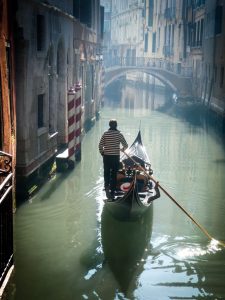
Overview
In Year 10 Italian students investigate more deeply the links between the Italian language and culture. They analyse and reflect on different viewpoints and experiences, including their own culture.
Students learn by applying vocabulary specific to the topics studied and make use of more complex grammar to express their point of view. Students consolidate the skills involved in learning Italian: reading, writing, speaking, listening and viewing.
Students further develop strategies for self-correction by putting into practice grammar in context. By learning to use a range of everyday language both orally and in writing to exchange information about their personal, social, local and broader issues, students explore how intercultural experience, technology, media and globalisation influence communication in the world today.
Assessment
In Italian students are assessed in the five macro skills that inform all language use: listening, speaking, reading, writing and viewing.
Connections, comparisons and communities provide the context for learning, while the interpersonal, interpretive and presentational contexts define how students use the language.
Pathways
Students are able to engage with Italian-speaking communities in Australia and internationally in a variety of endeavours, such as tourism, hospitality, the arts, diplomacy, social services, journalism, commerce, fashion, education, translating and interpreting.