
Year 9 Stream & Elective Options
Technology Electives | Choose Two Units
Students in Year 9 are able to choose two Technology electives to study (1 for each semester).
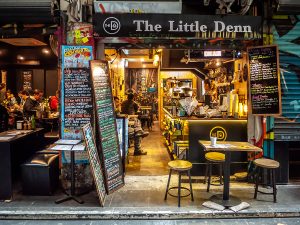
Melbourne is one of the most liveable cities in the world. Food and food culture are an integral part of our community, when we connect with friends and family, sharing food is at the centre of our experiences. If you are a ‘foodie’ who wants to taste and try and likes to bake this could be for you! Over the semester you will investigate, generate, produce and evaluate design problems to propose solutions. You will work independently and as part of a team when proposing these solutions.
Assessment
This semester length unit will examine
- Food history in Melbourne
- The development of our café scene
- Role of food in women’s support groups
- How new foods are introduced
Overview
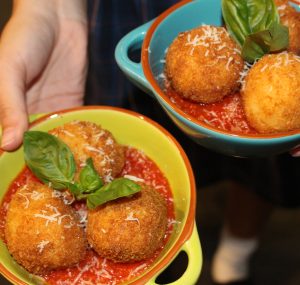
The purpose of this semester length unit is to study food through the cuisines of selected countries. The students examine a range of influences that affect food selection and identify foods linked to specific cultures.
In production classes there is an emphasis on interpersonal learning where co-operative group work is required. The students communicate with each other to complete set tasks safely and hygienically.
The students complete a range of investigations and production tasks with each topic.
Assessment
Students are assessed independently and in teams when completing major design tasks which also incorporate research and investigation. They complete analysis and evaluation of their own and their partner’s finished product.

Overview
Develop your own customised pattern from your favourite hoodie.
You will have the opportunity to explore the design possibilities that can be generated from your own favourite hoodie. By tracing and creating a pattern from it, you will investigate possible design scenarios and explore new design opportunities.
With a focus on sustainable design methods, you will learn how to make your new hoodie-like garment, integrating a screen print design to further customise the final design.
Assessment
- A design folio of both in-class and homework tasks that demonstrate creative and critical thinking.
- The major finished item, journal and evaluation
- Your production work assessment is based on your application to practical classes, the major finished item
Overview
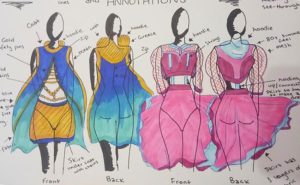
Learn to apply a variety of textile dyeing and decorating techniques in the creation of your own customised textile product.
You will have the opportunity to explore a range of techniques that can be applied to textiles/textile products. After trialling techniques such as dyeing, felting, embroidery and beading you will investigate possible applications for these techniques, and explore an opportunity to create your own unique product – eg. vest, clutch or other small bag.
Assessment
- A design folio of both in-class and homework tasks that demonstrate creative and critical thinking.
- The major finished item, journal and evaluation
- Your production work assessment is based on your application to practical classes, the major finished item
Year 9 Digital Technologies: Creating Tomorrow’s World: AI and Automation
Do you like to build things? Here’s your chance to work in teams and build the future!
Artificial Intelligence
- Teach your laptop to recognise different fruits
- Train a robot arm to sort objects by colour
Fabrication
- Learn to design a working model of a real-world object, e.g. a smart home
- Use materials to bring your design to life
Automation
Use sensors to automate processes, e.g.:
- Water a garden when it’s dry
- Turn on a fan when it’s hot
- Open a garage door when a car approaches
Assessment
- Demonstrate your understanding with small tasks
- Construct a team project: Design, build, code and demonstrate a digital solution. E.g. Use AI to detect who’s outside and either open the door automatically or sound an alarm.

Overview
Ever wanted to build a stunning website? Now you can!
Learn the basics
- Design webpages on any topic you like
- Add images and videos
- Make them beautiful with CSS styling
Advance your skills
- Make your website respond to different screen sizes
- Add cool features like Carousel slideshows
- Add buttons and make quizzes
Use AI Intelligently
- Use AI to help you identify and solve problems
- Learn how to use AI as your assistant while you stay in charge
Assessment
- A website created by you about a topic you like
- A website created with a friend for a real business
Pathways
You can further your digital skills in the following year by choosing Big Ideas in Computer Technologies.
Year 9 Arts Electives | Choose Two Units
Students in Year 9 are able to choose two Arts electives to study (1 for each semester).

Acting and Designing for Film and TV
Year 9 Drama is offered as an Arts elective with two separate courses that introduce core concepts of the VCE Theatre Studies and Drama study designs, with a contact time of four 80-minute periods per fortnight. This course focusses on acting and designing for film and television.
Students explore, develop and communicate the physical and psychological aspects of the roles and characters consistent with the soap opera genre. Using Australian television soapies as stimulus, the students plan, script, and devise their own “soap opera” style plays, using recognised conventions to communicate meanings.
Send-up (Satire) is examined in an ensemble task, as students prepare to imitate and mock famous celebrities of their choice using a prescribed structure as stimulus material. A brief student script serves as the basis for a fun, 7-minute performance in class.
Using a scene from a contemporary Hollywood movie script as stimulus, students will memorise and present a short, filmed monologue performance. The students will apply production areas to their interpretation – such as costume, props and multimedia/sound.
Theatre Analysis – Drama. Students respond to, analyse and evaluate a professional filmed theatre performance.
Skills acquired in this course are aligned to the VCE Drama study design and include character analysis, ensemble collaboration, performance skills and theatre analysis and evaluation.
Assessment
- Australian Soap Opera Ensemble Performance
- Satire Ensemble Performance
- Filmed Contemporary Monologue/Design
- Theatre Analysis and Evaluation

Overview
A Course in Theatre Production
Year 9 Drama is offered as an Arts elective with two separate courses that introduce core concepts from the VCE Theatre Studies and Drama study designs, with a contact time of four 80-minute periods per fortnight. This course follows on from acting for Film and Television and focusses on producing live theatre through a range of production roles including the student’s choices of actor, director, costume designer, hair and makeup designer, puppeteer, dancer and choreographer. Theatrical styles from Broadway to Commedia dell’Arte (the Art of Comedy) will be explored.
Students explore a range of Australian plays and undertake research to take on a variety of production roles from acting and directing to make-up, set design and costuming.
Students study the origins, characters, and plots of the Commedia dell’Arte – an Italian form of comedy – through an incursion workshop. The students use acting skills to devise a small theatrical production to a prescribed structure and make deliberate design choices in the application of costume, props, direction and multimedia to the presentation.
Students learn the conventions of Musical Theatre and produce their choice of a filmed monologue/duologue performance from a famous Broadway Musical or a filmed oral presentation, showcasing an original production design of the show.
Theatre Analysis – Musical. Students respond to, analyse and evaluate a filmed theatre performance of a professional musical.
Assessment
- Contemporary Australian Text Production Task
- Commedia dell’Arte Devised Performance
- Broadway Musical Scripted Performance/Production Role Presentation
- Theatre Analysis and Evaluation

Overview
- Perform every week in class either as a soloist or in a duo, trio or quartet
- Record all performances for reflection and learning
- Perform a ten minute recital at the conclusion of the semester
- Perform a song/piece in a class ensemble at Music Festival
- Identify and understand symbols, patterns, concepts used in music
- Theory: rhythms, pitch, tonality, scales and chords
- Aural: rhythmic and melodic transcription
- Research the concept of ‘deliberate practice’ and do an experiment using the findings
- Investigate the history, mechanics/anatomy of your instrument or the singing voice
- Listen to and explore the elements of music in a variety of songs and pieces
- Compose a short work using rhythm and scales as the stimulus
Assessment
- Compose and notate an original study that improves an aspect of their own playing.
- Examine and analyse a performance, noting musicianship and stage craft.
- Solo performance in recital.

Overview
- Form a band of 4 – 6 members
- Research and choose a collection of songs to play
- Learn how to play the chords, riffs, rhythms and melodies on an instrument and/or sing in the band
- Explore the workings of the main instruments in a band: Bass guitar, electric guitar, keyboard, drum kit and percussion
- Practise individually and rehearse as a band
- Learn how to read chord charts, tablature and sheet music
- Study relevant music theory: Pitch, Notation, Rhythm, Tonality and Chords
- Learn about sound amplification, the equipment required and how to use it effectively and safely
- Understand and take part in the recording process: Pre-Production (rehearsal), Production (recording) and Post- Production (mixing)
Assessment
Understand and take part in the recording process: Pre-Production (rehearsal), Production (recording) and Post- Production (mixing)
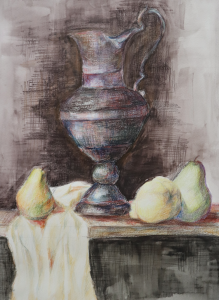
Overview
Year 9 students follow the stages of a studio process in order to manipulate art elements and principles creatively. Students explore a variety of art media and techniques. Through experimentation students make decisions about creating their artwork. Students enhance their appreciation of Art by developing analytical skills in response to their own artwork and the work of a range of artists.
Assessment
- a folio of artworks in a range of media
- a visual diary recording student’s development of ideas & evaluations of completed artwork
- Written responses analysing the artworks of a variety of artists, their aims and techniques
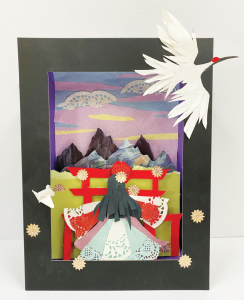
Overview
Year 9 students investigate a range of sculptural media, such as paper, card, clay & wire developing techniques responding to design criteria.
Responding creatively to design tasks, students are encouraged to employ the necessary skills to make functional and aesthetic forms.
Through research students find inspiration from professional ceramicists and learn the specific visual language used to analyse and evaluate their own work and the work of other artists.
Assessment
- 3D Artworks
- A visual diary recording the development of ideas and concepts, and evaluations of final artworks
- Analysis tasks researching artists from different historical and cultural context.
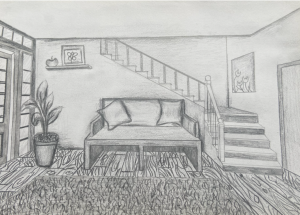
Overview
This semester course is for those students who have an interest in design, drawing and computer graphics. Students learn the basic skills in free-hand drawing that underpins all design work. This subject develops the skills and knowledge necessary to work with computer programs and enables the students to manipulate a range of tools in order to create effective design and digital imagery.
Assessment
- Folio of free hand drawings and a record of the design process
- Folio of computer generated designs
- Research tasks and analytical responses to graphic designs techniques
Language Streams
Continue with your language choice from Year 8.

Overview
In Year 9 French students investigate links between the French language and culture. They learn to analyse and reflect on different viewpoints and experiences, including their own culture. Students learn by using vocabulary specific to the topics studied and make use of grammar to express their point of view. Students become familiar with the skills involved in learning French: reading, writing, speaking, listening and viewing.
Students will develop strategies for self-correction by developing an understanding of grammar and context. Students are made aware of how intercultural experience, technology, media and globalisation influence communication in the world today
Assessment
In French students are assessed in the five macro skills that inform all language use: listening, speaking, reading, writing and viewing.
Connections, comparisons and communities provide the context for learning, while the interpersonal, interpretive and presentational contexts define how students use the language.
Pathways
Students are able to engage with French-speaking communities in Australia and internationally in a variety of endeavours, such as tourism, hospitality, the arts, diplomacy, social services, journalism, commerce, fashion, education, translating and interpreting.
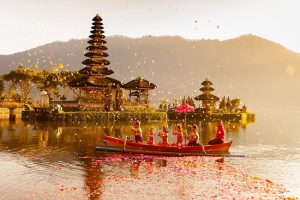 Overview
In Year 9 Indonesian students investigate links between the Indonesian language and culture. They learn to analyse and reflect on different viewpoints and experiences, including their own culture. Students learn by using vocabulary specific to the topics studied and make use of grammar to express their point of view.
Students become familiar with the skills involved in learning Indonesian: reading, writing, speaking, listening and viewing. Students will develop strategies for self-correction by developing an understanding of grammar and context. Students are made aware of how intercultural experience, technology, media and globalisation influence communication in the world today.
Assessment
In Indonesian students are assessed in the five macro skills that inform all language use: listening, speaking, reading, writing and viewing. Connections, comparisons and communities provide the context for learning, while the interpersonal, interpretive and presentational contexts define how students use the language.
Pathways
Students are able to engage with Indonesian-speaking communities in Australia and internationally in a variety of endeavours, such as tourism, hospitality, the arts, diplomacy, social services, journalism, commerce, fashion, education, translating and interpreting.

Overview
In Year 9 Italian students investigate links between the Italian language and culture. They learn to analyse and reflect on different viewpoints and experiences, including their own culture. Students learn by using vocabulary specific to the topics studied and make use of grammar to express their point of view.
Students become familiar with the skills involved in learning Italian: reading, writing, speaking, listening and viewing. Students will develop strategies for self-correction by developing an understanding of grammar and context. Students are made aware of how intercultural experience, technology, media and globalisation influence communication in the world today.
Assessment
In Italian students are assessed in the five macro skills that inform all language use: listening, speaking, reading, writing and viewing.
Connections, comparisons and communities provide the context for learning, while the interpersonal, interpretive and presentational contexts define how students use the language.
Pathways
Students are able to engage with Italian-speaking communities in Australia and internationally in a variety of endeavours, such as tourism, hospitality, the arts, diplomacy, social services, journalism, commerce, fashion, education, translating and interpreting.